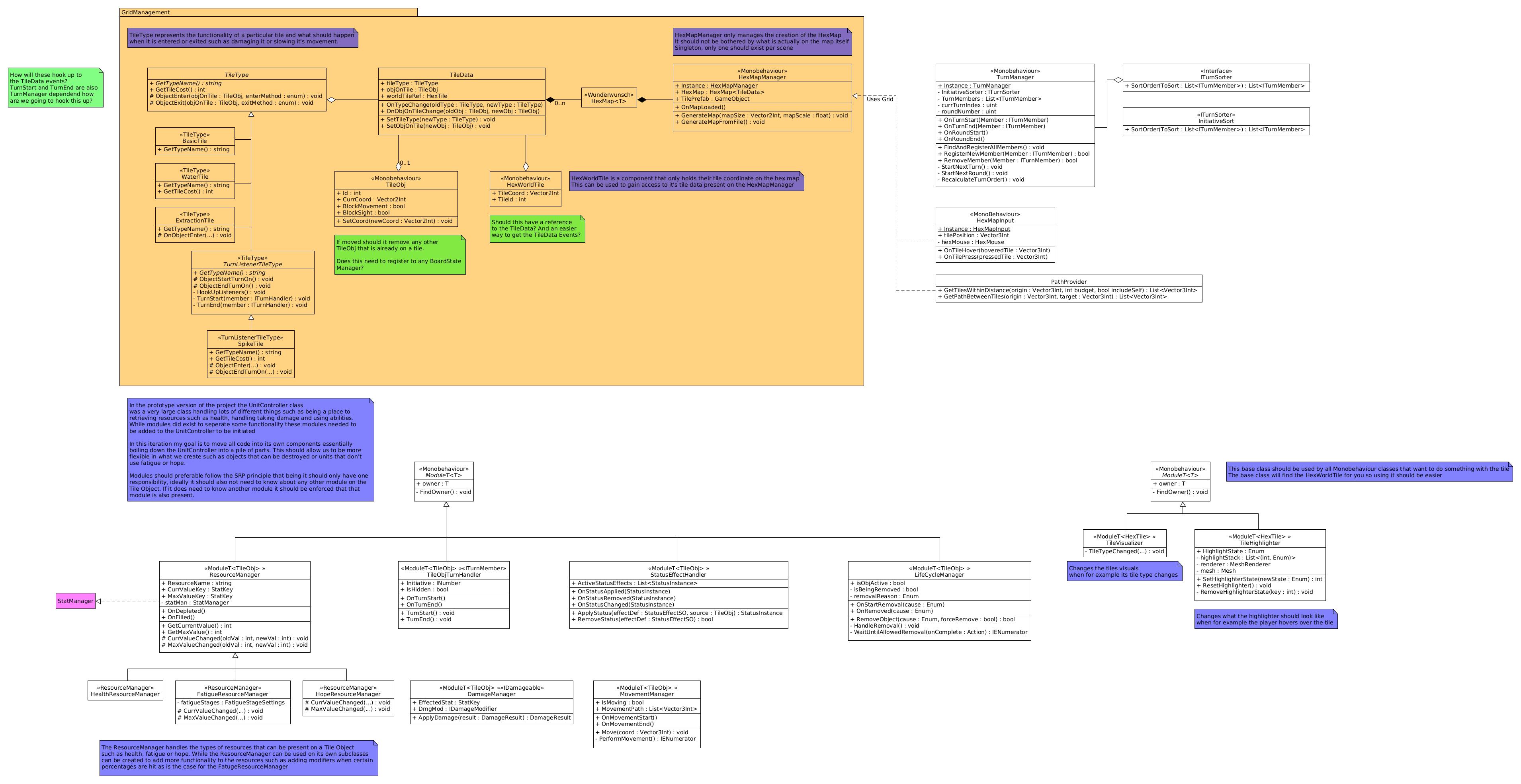
My goal with the projects system design
With this project I wanted to create a system that was highly flexible in its funtionality. So that most of it's systems can easily be reused by design for whatever purpose they may need. For this goal I have done the following:
- Tiles contain an abstract class called TileType that determines the functionality of a tile when for example: stepping onto or off a tile
- Tile object functionality is split into multiple modules, making it so that each tile object can have different functionality simple by assigning different modules to it
- Numbers used are from an Interface, making it possible to use different numbers from different sources. For example: numbers can be gathered from the units stat component
- Damage calculations are a composet value, making it easy to change to way damage is calculated or even make it different for each unit
If desired you can view the code I had written for the project in the following github repository.
With this project I wanted to create a system that was highly flexible in its funtionality. So that most of it's systems can easily be reused by design for whatever purpose they may need. For this goal I have done the following:
- Tiles contain an abstract class called TileType that determines the functionality of a tile when for example: stepping onto or off a tile
- Tile object functionality is split into multiple modules, making it so that each tile object can have different functionality simple by assigning different modules to it
- Numbers used are from an Interface, making it possible to use different numbers from different sources. For example: numbers can be gathered from the units stat component
- Damage calculations are a composet value, making it easy to change to way damage is calculated or even make it different for each unit
If desired you can view the code I had written for the project in the following github repository.